
Introduction
Heart disease remains one of the leading causes of health complications worldwide. One of the most common reasons behind heart attacks and chest pain is the blockage of coronary arteries due to plaque buildup. Thanks to advancements in cardiac care, treatments have become more effective and less invasive. Among these innovations, laser angioplasty has emerged as a promising technique for treating complex arterial blockages. If you are seeking expert guidance for heart-related concerns, consulting the best Cardiologist in Kolkata can help you understand whether this advanced procedure is suitable for your condition
What is Laser Angioplasty?
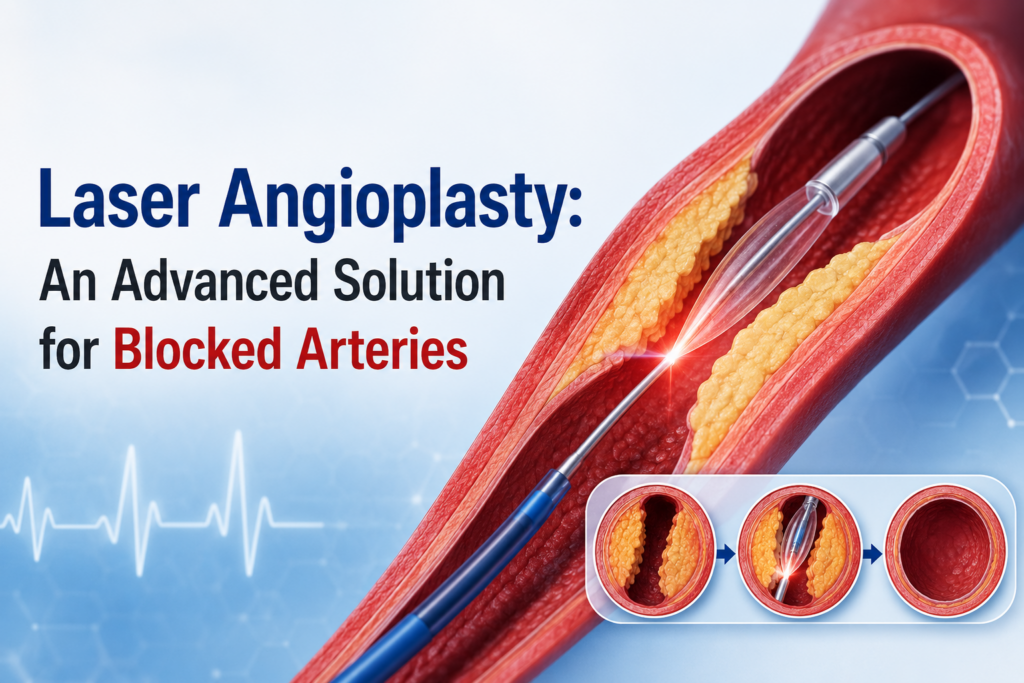
Laser angioplasty is a minimally invasive procedure used to open blocked or narrowed arteries. Unlike conventional angioplasty, which primarily relies on a balloon to widen the artery, laser angioplasty uses a specialized laser catheter to vaporize or break down plaque deposits inside the blood vessels. Laser also vaporises blood clotsThe laser emits pulses of light energy that help remove the blockage, restoring normal blood flow to the heart. This technique is particularly useful in cases where the plaque is hard, calcified, or difficult to treat using traditional methods.
How Does the Procedure Work?
The procedure begins with the insertion of a thin catheter through an artery in the wrist or groin. The catheter is carefully guided to the blocked coronary artery. Once positioned correctly, the laser is activated to break down the plaque into microscopic particles that are safely absorbed by the bloodstream.After the blockage is cleared, a balloon may be inflated to further widen the artery, and a stent may be placed to keep the vessel open and maintain healthy blood flow.
When is Laser Angioplasty Used?
- To treat repeat blockage occurring inside a previously placed stent.
- When a conventional balloon cannot cross a severely narrowed artery.
- To modify moderately calcified plaques before angioplasty or stenting.
- To reduce sticky thrombus burden and improve blood flow.
Benefits of Laser Angioplasty
- Effective in treating heavily calcified or complex blockages.
- Improves blood flow to the heart.
- Minimally invasive with a shorter recovery period.
- Reduces symptoms such as chest pain and shortness of breath.Can be combined with stenting for better long-term outcomes.
Who May Need Laser Angioplasty?
- Have severe coronary artery disease.
- Experience recurrent blockages after previous angioplasty.
- Have calcified plaques that are difficult to treat with standard balloon angioplasty.
- Where clot burden (sticky thrombus) within artery is high
- A detailed evaluation by a cardiologist, including angiography and other diagnostic tests, helps determine whether laser angioplasty is the most appropriate treatment option.
Recovery After the Procedure
Most patients recover quickly after laser angioplasty. Hospital stays are generally short, and patients can often return to their normal activities within a few days. Following a heart-healthy lifestyle, taking prescribed medications, and attending regular follow-up appointments are essential for maintaining long-term cardiovascular health.
Conclusion
Laser angioplasty represents a significant advancement in the treatment of coronary artery disease, offering a safe and effective option for patients with complex arterial blockages. By restoring blood flow and reducing symptoms, it can greatly improve quality of life and lower the risk of future cardiac events. If you are experiencing heart-related symptoms or have been diagnosed with blocked arteries, consulting the best Cardiologist in Kolkata can help you explore the latest treatment options, including laser angioplasty, and receive personalized care for optimal heart health.