
Introduction
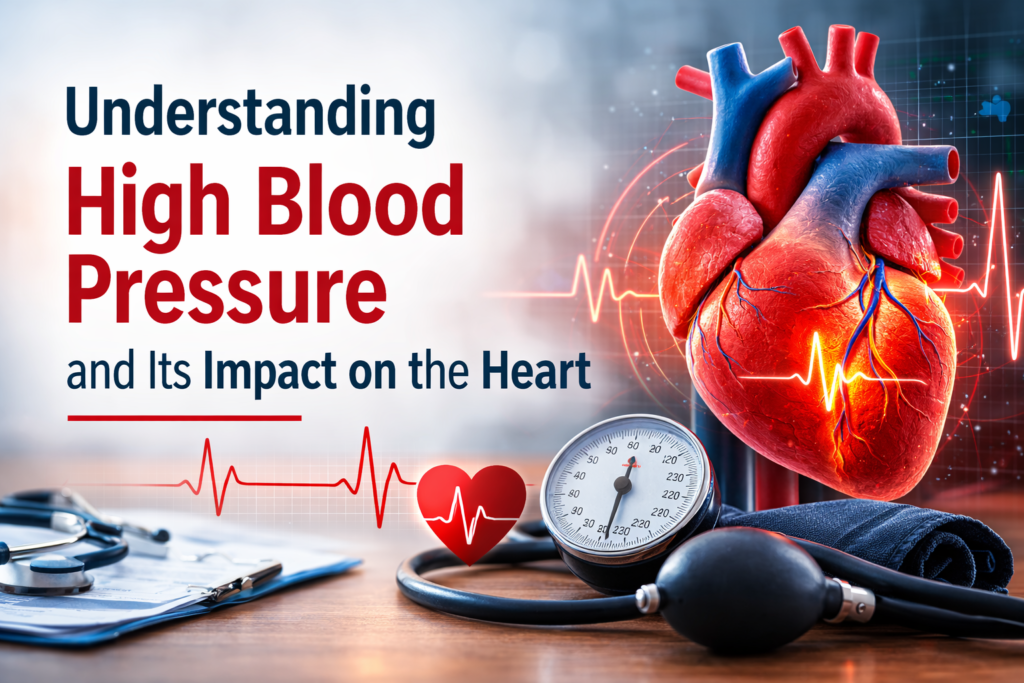
High blood pressure, also known as hypertension, is often called the “silent killer” because it usually shows no early symptoms but can seriously damage your heart over time. Many people ignore mild signs, which increases the risk of heart attack, stroke, and other heart diseases. Consulting the best Cardiologist in kolkata at the right time can help in early diagnosis, proper treatment, and long-term heart protection.
What is High Blood Pressure?
Blood pressure is the force of blood pushing against the walls of your arteries. When this pressure stays consistently high, it is called hypertension. Normal blood pressure is usually around 120/80 mmHg, while readings above 140/90 mmHg are considered high.
How High Blood Pressure Affects the Heart
1. Thickening of the Heart Muscle
High blood pressure forces the heart to work harder, causing the heart muscle to thicken. This can lead to reduced efficiency and eventually heart failure.
2. Increased Risk of Heart Attack
Hypertension damages arteries and promotes plaque buildup, which can block blood flow to the heart and trigger a heart attack.
3. Heart Failure
Over time, constant pressure weakens the heart, making it unable to pump blood effectively.
4. Coronary Artery Disease
High blood pressure contributes to narrowing of coronary arteries, reducing oxygen supply to the heart.
5. Risk of Stroke
Hypertension can damage blood vessels in the brain, increasing the chances of stroke.
Common Causes of High Blood Pressure
- Unhealthy diet (high salt and processed food)
- Lack of physical activity
- Obesity
- Stress
- Smoking and alcohol
- Family history
Symptoms to Watch For
Although many people have no symptoms, some may experience:
- Headaches
- Dizziness
- Shortness of breath
- Chest discomfort
- Fatigue
How to Prevent and Manage High Blood Pressure
- Eat a low-salt, heart-healthy diet
- Exercise regularly
- Maintain a healthy weight
- Manage stress
- Quit smoking
- Monitor blood pressure regularly
- Follow doctor’s advice and medications
Conclusion
High blood pressure is manageable when detected early, but ignoring it can lead to serious heart complications. Regular check-ups, lifestyle changes, and timely treatment are essential for protecting your heart health. If you notice contributes risk factors or symptoms, consulting the best Cardiologist in kolkata can help you take the right steps toward a healthier heart and a better quality of life.